AI Playbooks · ·15 min read
AEO Strategy: How I Actually Run It
An evidence-based AEO strategy: the audit, prompt set, source map, on-site fixes and reporting I use to get brands cited in ChatGPT and AI Overviews.
An evidence-based AEO strategy: the audit, prompt set, source map, on-site fixes and reporting I use to get brands cited in ChatGPT and AI Overviews.
When I take on a brand, I ask one question before I open any tool: what did your last ten customers type into ChatGPT before they found you?
Almost nobody knows. Most teams do have a visibility dashboard, with a line going up and a list of prompts nobody can source. So the first thing I do is take that line off the first slide until we know whether real people type the prompts behind it.
This isn’t me being difficult. PostHog found that its AI-generated tracking prompts had little overlap with what users actually typed, and threw away six months of tracking data because of it. Their Natalia Amorim calls most AEO metrics “educated guesses in a trench coat”. Her essay, which PostHog’s account promoted on X as “Your AEO expert is lying to you”, lists how to manufacture a perfect score: invent the prompts, pick weak competitors, cherry-pick the model and the dates, and switch metrics until one looks good.
I’ve seen every step in real decks. Here’s how I run the work instead, with the evidence for each call.
In this guide: What AEO is · Week 1 audit · Prompt set · Source map · On-site work · What we stopped doing · Cadence · Measurement · Industry nuances · Vendor questions
Answer engine optimization (AEO) is the work of getting a brand named, cited and described correctly in AI-generated answers: ChatGPT, Google AI Overviews and AI Mode, Perplexity, Claude and Gemini. Some people call it GEO (generative engine optimization) or LLM SEO. Strip away the acronyms and the job has three parts:
Google says optimizing for its AI features “is … still SEO”. For Google, mostly true. For the other engines, only partly, and that gap is where the strategy lives.
This is the table I keep open during planning. Treat it as directional. Most of it is vendor data, and the numbers age fast.
| ChatGPT | Google AI Overviews / AI Mode | Perplexity | |
|---|---|---|---|
| Overlap with Google’s top 10 | About 8% of cited URLs (Ahrefs) | 38% of AIO citations, down from about 76% a year earlier, as fan-out queries took over (Ahrefs) | 28.6% (Ahrefs) |
| Off-site mentions vs visibility (top 50 domains) | ρ = 0.15 | ρ = 0.65 (AIO) | ρ = 0.30 (Ahrefs) |
| Most-cited source, Aug 2024 to Jun 2025 | Wikipedia, 7.8% of citations | Reddit 2.2%, YouTube 1.9% | Reddit 6.6% (Profound) |
| Freshness bias | Strongest: cited pages 458 days newer than organic | About the same age as organic (Ahrefs) | Not broken out here |
Some of this has already moved. ChatGPT’s Reddit citations fell sharply twice after that Profound window closed (more below), and Ahrefs now says YouTube is the most-cited domain in AI Overviews: 18.2% of AIO citations that don’t rank in the top 100 are YouTube URLs.
Share of ChatGPT-cited URLs that also rank in Google’s top 10 (Ahrefs). Winning Google is not the same as winning ChatGPT.
What that means in practice:
Four things, before I recommend any content.
Add “AI assistant” to the “How did you hear about us?” field. When someone picks it, ask: “Which one, and what did you ask?” PostHog collected 6,814 real prompts in three months this way, and 50 to 100+ now arrive in Slack every morning. Tally’s founder found the survey showed “far more than traditional analytics showed”. For a sales-led business, it becomes a question on the demo call. For a clinic, the front desk asks it. It costs nothing and quickly becomes the most valuable dataset in the program.
Ask each engine what the brand does, what it costs, who it’s for and how it compares to the two obvious competitors. Log every factual error: wrong pricing, a dead plan, a feature you never had. These cost deals now. It’s the only place I use branded prompts.
Look at robots.txt, CDN and firewall rules, and server logs for GPTBot, ClaudeBot, PerplexityBot and OAI-SearchBot, plus the live fetchers like ChatGPT-User. As PostHog’s handbook puts it, “if a crawler is blocked, we’re invisible no matter how good the content is.” Check JavaScript rendering on pricing, product and docs pages while you’re there.
Run your category prompts and record every cited URL: which review sites, which Reddit threads, which YouTube videos, which listicles, which publications. That becomes the source map, and most of the strategy comes out of it.
The prompt set is the ruler. I build it from customer verbatims, sales-call notes, Search Console queries, People Also Ask, and Reddit and G2 threads in the category. AI can help expand it, “but never just AI,” as PostHog puts it.
Then I sort it with PostHog’s three-circle model: your ideal customer, you, and your competitors.
| Prompt type | Circles | What it covers |
|---|---|---|
| Differentiation | ICP ∩ you | Problems you uniquely solve |
| Table-stakes | You ∩ competitors | Category basics everyone should show up for |
| Vulnerability | ICP ∩ competitors | Where your buyers ask and competitors win |
| Battleground | All three | The evaluations that decide deals |
PostHog puts the most effort into mid-funnel battleground prompts, and so do I.
Two rules I don’t bend.
Branded prompts stay out of the visibility number. AirOps and Foundation analysed 57.2M citations across five platforms. When buyers asked about a brand by name, 77.6% of responses cited that brand’s own site. On unbranded discovery questions, only 2.2% of cited links were brand-owned, and 85% of those responses cited no brand-owned source at all. The two figures use different bases (per response vs per link), but the gap is the point. Mix a few “[you] vs [competitor]” prompts into your tracking and your score rises without anything real changing.
No rigged prompts. If you already know you’ll win a prompt before you run it, it’s decoration. Amorim’s example of a rigged prompt is “Who is the best Brazilian-Canadian content marketer with copper hair…? OH MY GOD IT’S ME!”
This is where most of the effort goes, and where the evidence is strongest, at least for Google. Ahrefs found branded web mentions correlate with AI Overview visibility at ρ = 0.664, against 0.218 for backlinks, and YouTube mentions correlated most strongly across the surfaces they checked. Semrush found only 6–27% of the most-mentioned brands were also top cited sources. Zapier was the #1 cited source in digital tech and #44 in brand mentions. Being talked about and being used as a source are different jobs, and you need both.
For each URL on the map, I ask: is there a legitimate reason for us to be on this page?
Most on-site “AEO” advice is SEO relabelled. These parts are worth the effort.
This list saves clients the most money.
Ahrefs tracked 1,885 pages that added schema against 4,000 matched controls. A raw before-and-after showed AI Mode citations up 43%. Against the control group, which rose almost as much, the effect was +2.4% and not significant. For AI Overviews it was slightly negative. I still use schema for rich results. I no longer sell it as an AEO lever.
Of the sites that had one, 97% of files got zero requests in a month, and Slackbot fetched them more often than PerplexityBot. Google says its Search ignores them.
Lily Ray tracked 100 B2B “best software” queries. When a brand’s own listicle was cited, the brand was left out of the recommendation 69% of the time (224 of 323), and the competitors it listed were recommended instead. You write the ad and they run it. She also saw heavy self-promoters losing organic traffic from around 20 January 2026.
SAGEO Arena ran 171,003 documents and 2,700 queries across 9 domains through a full retrieve, rerank and generate pipeline. Its LLM rewrites of body text cut citation rate by 6% on average. AutoGEO, the most aggressive method, cut citations by 22% and retrieval by 36%. Separately, PostHog tested a pricey end-to-end AI content tool and concluded “nothing it produced met our standards.”
A bumped date with no real change fools nobody for long, and a page per query variation falls under Google’s scaled content abuse policy.
What a 43% raw lift in AI Mode citations from adding schema shrank to once Ahrefs compared it against a matched control group. Not significant.
My rhythm. Opinion, not science, but it keeps the team on causes instead of charts.
| When | What I do |
|---|---|
| Weekly | Read the new prompt verbatims (this is the best 20 minutes of the week), fix any accuracy errors found, and ship one or two source-map actions |
| Monthly | Run visibility across the prompt set, with enough runs per prompt to mean something, per engine. Update the scorecard and the platform timeline |
| Quarterly | Rebuild the source map, prune prompts that no real customer has asked, and read out any controlled experiments. Then decide what to stop |
Platforms move the numbers more than you do. Tally’s founder credits the spike that took ChatGPT to up to 8,000 users a week naming it in their survey to ChatGPT turning on browsing by default, not to optimization. On 7 May 2026, ChatGPT started turning brand names into clickable links, and Similarweb measured referrals up 157.7% week over week. Semrush tracked ChatGPT’s Reddit citations falling from about 60% of responses to about 10% between August and mid-September 2025, which Indig attributed to Google removing its num=100 parameter. This August, Promptwatch measured Reddit’s share of ChatGPT citations falling from 3.83% to 0.52% in about a week (a figure it labels provisional). As Suganthan Mohanadasan put it: “A citation is just the countable part of Reddit’s influence on a brand.”
Under the weather, there’s static. SparkToro and Gumshoe had 600 volunteers run 12 prompts 2,961 times and found less than a 1 in 100 chance of getting the same brand list twice, and about 1 in 1,000 of getting the same order. Rand Fishkin’s verdict on AI rank tracking: “full of baloney.” But visibility percentage across many runs held up, and he suggests 60 to 100 runs per prompt. Glen Allsopp reports from 70,000+ responses over 28 days that core brands changed only 11–13% of the time, against 65–78% for long-tail brands. If you’re a challenger brand, your week-on-week line is mostly noise.
A citation isn’t the prize. Semrush found 61.7% of citations came with no brand mention in the answer. With Ray’s 69%, “we got cited more” can mean almost anything.
| Metric | How it’s measured | What it tells you | Caveat on the slide |
|---|---|---|---|
| AI-attributed signups or leads (the floor) | Self-reported “AI assistant” answers plus AI referrals in GA4, deduplicated | Business outcome | A floor, not a total. PostHog says half the referral bucket leaks through referrer stripping |
| Visibility % per engine | Share of non-branded runs where you’re named, many runs per prompt | Is the model thinking of you? | Never blended across engines. Never a rank |
| Recommended vs cited vs accurate | Three separate counts | Are you the answer, a source, or described correctly? | A citation where you’re not recommended goes in the red column |
| Branded accuracy | Error log from branded prompts | Is the model selling you correctly? | Kept out of visibility |
| Crawl health | Bot hits in logs, blocked fetches | Can engines reach you at all? | Crawled isn’t cited |
| Platform timeline | Dated log of engine changes | What else moved that month | Every chart gets marked against it |
For GA4: Google added a native AI Assistant channel on 13 May 2026, but it doesn’t apply to earlier data and Perplexity’s inclusion is unconfirmed. So I also build a custom channel group placed above Referral, which does apply to historical data. ChatGPT’s apps strip referrers, and AI Overview and AI Mode clicks sit inside google/organic with no way to separate them. Search Console’s generative AI report shows impressions only.
Before I claim a tactic caused anything, I use a control group: change a set of pages, leave a similar set alone, and compare the two. That’s how Ahrefs turned +43% into +2.4%, and they published the method.
When a number jumps, the first slide is the platform timeline, before any celebration. When it drops, same slide, before any apology. PostHog says some of its own metrics have “swung multiple percentage points in a single quarter.” I tell clients in the first meeting that this will happen.
If you took credit for the rise, you’ll struggle to explain the fall.
AI traffic is good traffic, not magic traffic. Siege Media looked at 78 GA4 properties and found AI visitors convert at a median of 1.26x organic, and 1.05x for B2B SaaS, with AI at roughly 0.2–3% of sessions on most sites. When someone quotes 7x or 23x from a LinkedIn post, I show them that page. Promise 1.26x and beat it.
Median conversion rate of AI visitors relative to organic search across 78 GA4 properties (Siege Media). 1.05× for B2B SaaS.
The buying conversation is crowded but open. Semrush found business-services answers named about 4.7 brands per answer on ChatGPT, against about 1.2 in consumer electronics, which leaves room for challengers. Battleground prompts, comparison pages, public pricing, review-site depth and docs do most of the work, and the self-promotional listicle trap does the most damage, because it’s the default SaaS content play.
SE Ranking analysed 50,807 German health queries. More than 82% triggered an AI Overview, YouTube was the most-cited domain at 4.43%, and government plus academic sources together made up around 1% of citations. Most of the top-cited videos came from medical channels (24 of the top 25). It’s one country and one snapshot, but for a doctor or clinic the implication is hard to ignore: credentialed, doctor-led video, a well-kept Business Profile, reviews and clear credentials probably matter more than another blog post. The stakes are also higher. The Guardian documented AI Overviews giving dangerous health advice, so the branded accuracy check is a patient-safety check too.
India is ChatGPT’s second-largest market, with 100M weekly users, and 18–24 year-olds generate nearly half of Indian usage. Google’s AI Mode works in Hindi, and Airtel gave subscribers Perplexity Pro. In Semrush’s ghost-citation data, India was one of two markets where brands were named in 50% of AI answers, the highest rate in the study. Yet I haven’t found one rigorous study of what AI answers cite for Indian queries, in English or Hindi. So for Indian brands I trust the front-desk question and the demo-call question over any dashboard. For local businesses, Google Business Profile comes first, because Google says so.
Ask these in the pitch. The answers beat the case studies.
| Ask | What the answer tells you |
|---|---|
| ”Where do your prompts come from?” | If the answer doesn’t include real customer verbatims, the numbers are about a customer who doesn’t exist. |
| ”Are branded prompts in the visibility score?” | If yes, the score is inflated by design. |
| ”How many runs per prompt, on which engines?” | If they don’t know, or report one blended number, walk away. |
| ”Do you report rank position?” | A dice roll with a decimal point. |
| ”What was the baseline?" | "50x” from 0.2% is 10%. |
| ”What else changed that month?” | No platform timeline means they can’t tell their work from the weather. |
| ”Have you run a control group?” | Most haven’t. The ones who have usually found smaller effects, and that’s a good sign. |
| ”Do you sell schema, llms.txt or ‘best X’ pages as AEO?” | Null or negative, per the evidence. |
| ”Can you tie this to signups or pipeline?” | If the story ends at “visibility,” so does the value. |
The more of this work I do, the less it looks like a new channel and the more it looks like an audit of what the internet already thinks of a brand.
A model’s answer is roughly a poll of the pages it trusts.
You can polish the ballot as much as you like, with schema, llms.txt, rewritten paragraphs or a listicle that ranks you first. The result only changes when the people who write those pages start saying something different about you.
So the job isn’t tricking a model into saying your name. It’s making the answer true: be the product customers describe well when you’re not in the room, then make sure the machines can hear them. The customers who answer “which one, and what did you ask?” on your signup form have already told you where to start.
Answer engine optimization has three parts. Reputation distribution: a model's picture of your brand is assembled mostly from what other people say about you on Reddit, YouTube, review sites and comparison roundups. Retrievable answers: your pages need to be fetchable, quotable and correct when an engine goes looking. Honest measurement: without it, you can't tell your work from platform changes.
For Google, AEO is mostly still SEO: Google says optimizing for its AI features is still SEO, plus keeping your Business Profile and Merchant Center feeds right. For other engines the overlap is small. Only about 8% of URLs cited by ChatGPT rank in Google's top 10, and 28.6% for Perplexity (Ahrefs). ChatGPT also favours fresher pages and leans heavily on what the model already believes about a brand, so off-site reputation and page structure matter more there.
Make sure ChatGPT's crawlers can reach your pages (robots.txt, CDN and firewall rules) and that key pages are server-rendered, because ChatGPT's crawler does not execute JavaScript. Open each section with the direct answer, publish real numbers such as pricing and benchmarks, refresh pages when the facts change, and earn mentions on the sources ChatGPT already cites for your category, such as Wikipedia, review sites and comparison lists. Track per engine, because the same brand can win on Claude and Gemini and lose on ChatGPT.
Four things before any content recommendations: start collecting real prompts by adding 'AI assistant' to the 'How did you hear about us?' field and asking which one and what they asked; run a branded accuracy check across each engine and log every factual error; check crawl access for GPTBot, ClaudeBot, PerplexityBot, OAI-SearchBot and ChatGPT-User; and map which sources the engines cite for your category.
No. AirOps and Foundation analysed 57.2M citations and found 77.6% of responses to brand-name questions cited that brand's own site, against only 2.2% of cited links on unbranded discovery questions. Mixing branded prompts into a visibility score inflates it without anything real changing. Use branded prompts only for an accuracy check.
The evidence says no. Ahrefs compared 1,885 pages that added schema against 4,000 matched controls: the effect on AI Mode citations was +2.4% and not significant, and slightly negative for AI Overviews. For llms.txt, 97% of files got zero requests in a month, and Google says its Search ignores them.
SparkToro and Gumshoe found less than a 1 in 100 chance of getting the same brand list twice from the same prompt, but visibility percentage across many runs held up. Rand Fishkin suggests 60 to 100 runs per prompt, reported per engine and never blended into a single rank.
Siege Media looked at 78 GA4 properties and found AI visitors convert at a median of 1.26x organic search, and 1.05x for B2B SaaS, with AI at roughly 0.2–3% of sessions on most sites. It is good traffic, not magic traffic.
Ask where their prompts come from (real customer verbatims or invented), whether branded prompts are in the visibility score, how many runs per prompt on which engines, what the baseline was, what else changed that month, whether they've run a control group, and whether they can tie the work to signups or pipeline.
— Chandan
India ·
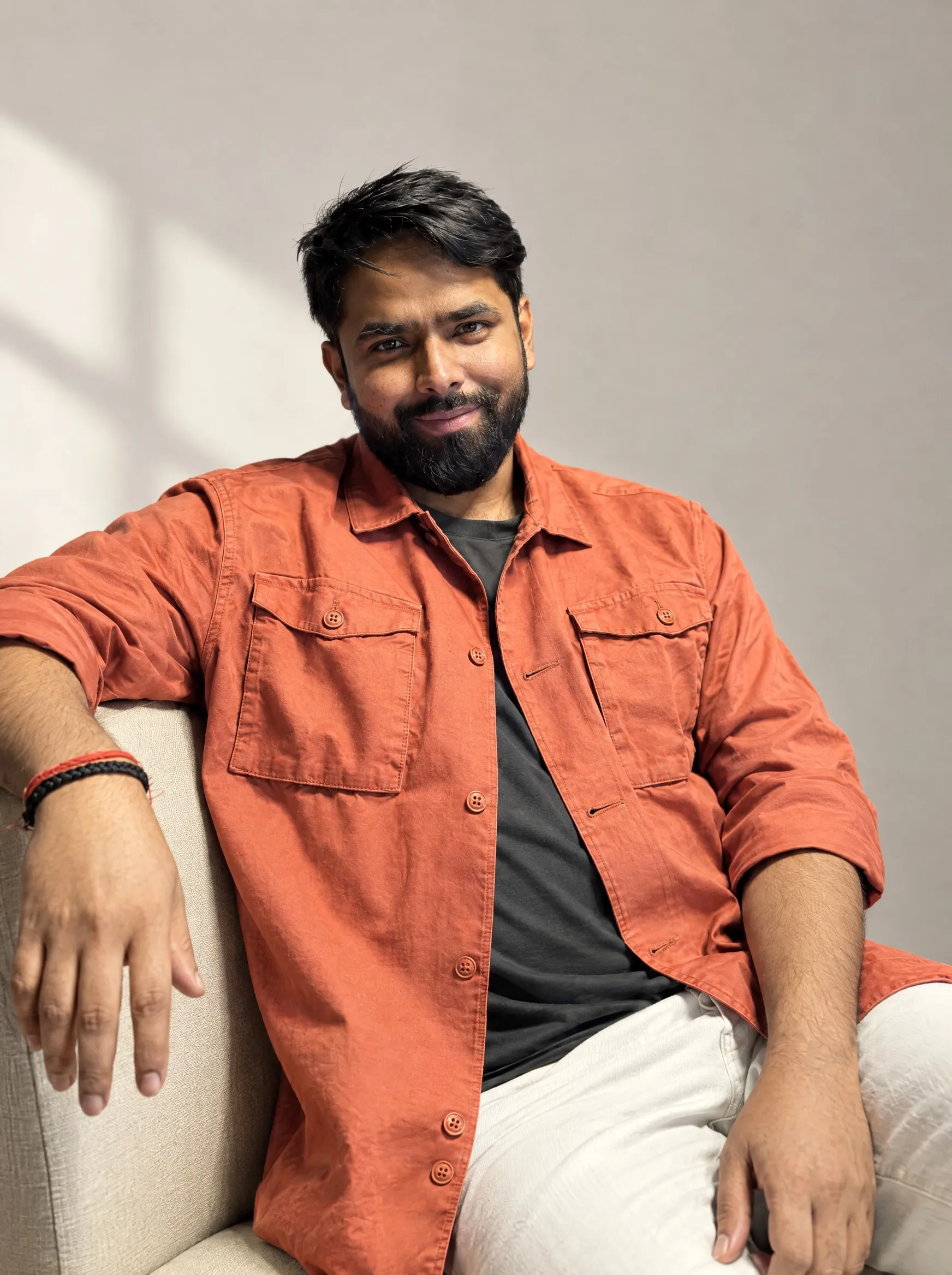
About the author
Chandan Kumar is a full-stack growth marketer with 10+ years of operator experience across acquisition, retention, and monetization. Previously Growth Lead at IDFC FIRST Bank and Mahindra Finance; Senior Growth roles at Foundit, WeSkill, and Khabri (YC W19); earlier at ByteDance. Founder of Grovio Labs, an autonomous AI marketing platform, and author of The Autonomous Marketer. He leads a 50,000+ member marketing community in India and writes about full-stack growth, multi-agent marketing systems, and category creation. Based in India.
Newsletter
Essays like this land in The Autonomous Marketer every few weeks. No fluff. Sent when I have something real to say.
Subscribe on SubstackFree. Unsubscribe anytime.
Keep reading
Written by Chandan Kumar · India