India Lens · ·12 min read
The B2B Distribution Problem in India
B2B in India isn't LinkedIn plus outbound — it's trust networks and regional relationships. Here's the distribution architecture that works.
B2B in India isn't LinkedIn plus outbound — it's trust networks and regional relationships. Here's the distribution architecture that works.
The most common B2B marketing question I get from Indian founders is some version of: “We’ve tried outbound email, LinkedIn ads, and cold calling — nothing works. What are we missing?“
How effective standard Western B2B channels — cold email, LinkedIn ads, PLG — are when applied directly to the Indian market.
Almost always, the answer is the same: they are trying to run a Western B2B distribution playbook in a market where the trust architecture is fundamentally different, the decision-making process is longer and more networked, and the channels that work in San Francisco or London are, at best, 30% as effective in Mumbai or Pune.
This is not a technology gap. It is a market architecture gap. Indian B2B distribution works — but it works differently.
The Western B2B growth playbook — content marketing, SEO, cold email sequences, LinkedIn ads, product-led growth, free trial — was built for a market where:
India flips most of these assumptions.
Indian B2B buying is committee-driven, relationship-mediated, and trust-first. A cold email from an unknown vendor is not evaluated on the quality of the value proposition — it is filtered by the question “do I know anyone who knows this company?” The answer, usually, is no. The email gets ignored regardless of how well it is written.
LinkedIn ads reach Indian business buyers, but they convert at a fraction of Western rates because the platform is used differently — more for content consumption and job searching than for commercial discovery. A campaign that generates 50 demo requests per ₹1 lakh in London generates 8 in Delhi for the same spend and same product quality.
And product-led growth — free trials, self-serve onboarding, bottom-up SaaS expansion — faces a structural challenge in India: the verification loop. Indian B2B buyers, across almost every category, want some form of personal verification before they progress. A phone call, a reference conversation, an in-person meeting, or at minimum a live video call with a human. Self-serve digital flows convert poorly for anything above ₹20,000 per year in annual contract value.
This is not a flaw in Indian business culture. It is a rational response to a market where information asymmetry has historically been high and trust needs to be earned through relationship rather than claimed through positioning.
B2B distribution in India that produces results is built on three pillars that work differently from the Western model.
Pillar 1: Referral architecture within professional networks
The Indian B2B market at any revenue tier is smaller and more interconnected than it appears from the outside. The network of founders, CFOs, or procurement heads in any specific industry in any specific city is usually 200–500 people — and they talk to each other regularly.
A referral from one person in this network to another is not just a lead. It is a trust transfer that compresses the sales cycle from 3–4 months to 3–4 weeks.
The referral architecture that works: identify your top 10 customers by satisfaction and network centrality (who do they know?). Build a formal program: a clear script for how they introduce you, a reference deck they can share, genuine incentives for successful referrals, and regular engagement that keeps you top-of-mind when opportunities arise. Then ask them systematically for specific introductions — not “let me know if you think of anyone” but “do you know anyone who is the [specific role] at [specific company type] dealing with [specific problem]?”
This requires founder time, not marketing budget. It is the most capital-efficient B2B acquisition motion available in India.
Pillar 2: Founder-led content that builds category authority
Indian B2B buyers trust people before they trust brands. A company page on LinkedIn with 50,000 followers generates less qualified inbound than a founder with 5,000 engaged followers in their specific industry niche.
Founder-led content is the B2B distribution investment with the best 24-month return in India right now — not because it generates immediate leads, but because it builds the recognition and authority that makes every other distribution motion more efficient. When your name is known in your category, the cold email converts. The LinkedIn ad generates response. The referral introduction is taken seriously.
The content that works is not product announcements or company news. It is genuine insight about the problems your category solves — specific, contrarian, or deeply practical enough that buyers in your category save and share it. Written with a point of view. Published consistently (weekly is better than monthly; monthly is better than occasionally).
The compounding effect: a founder who publishes genuinely useful content about their category for 18 months accumulates an authority asset that new entrants cannot quickly replicate regardless of budget.
Pillar 3: Community participation, not community building
The mistake most B2B startups make is trying to build a community from scratch — a forum, a Slack group, a LinkedIn group. This is expensive, slow, and only works when you already have enough customers to seed the community with genuine activity.
What works faster: participating genuinely in existing communities where your buyers are already concentrated. Industry associations. Trade events. Sector-specific WhatsApp and Telegram groups. LinkedIn communities around specific professional functions.
In these communities, the distribution play is not self-promotion. It is becoming the most genuinely helpful person in the room for the problems your product solves. Answer questions. Share frameworks. Contribute before you ask for anything.
This compounds: the trust built through consistent, unsponsored contribution in a community is worth more than any number of sponsored posts or booth appearances. Indian B2B buyers remember the person who helped them — and they refer business to that person when the opportunity arises.
India is not one B2B market. The buyer in Bengaluru is not the buyer in Surat. The SME manufacturer in Ludhiana is not the SaaS procurement head in Hyderabad. The trust networks, communication preferences, and decision-making processes are genuinely different by city, by industry, and by company size.
The B2B distribution playbook that works for pan-India coverage requires segment-specific approaches for at least three distinct market types:
| Segment | Distribution approach | Best channels | Early-stage fit |
|---|---|---|---|
| Metro tech (Bengaluru, Delhi, Mumbai, Pune) | Highest digital literacy; standard trust signals work | LinkedIn, events, case studies, peer referrals | High — closest to Western B2B behaviour |
| Industrial & manufacturing (Gujarat, Maharashtra, Punjab) | Deeply relationship-mediated; in-person presence essential | Trade events, trade associations, WhatsApp, channel partners | Medium — requires field investment |
| Government & PSU | Multi-stakeholder relationship investment; long procurement cycles | Stakeholder networks, compliance-first positioning | Low — not suited to early-stage without sector experience |
Building a pan-India B2B distribution strategy requires a honest reckoning with which of these segments you are actually building for — and a distinct playbook for each, not a single approach applied uniformly.
Without recommendation by segment — since the right channel depends entirely on your buyer — here is where the ROI is in Indian B2B marketing in 2026:
LinkedIn from the founder: Highest leverage, lowest marginal cost. Requires founder time and consistency. 12-month investment, compounding returns.
WhatsApp for prospect nurture: Higher response rates than email at every stage of the funnel. Requires a genuine content strategy (not broadcast spam) and permission-based list building. The right tool for keeping warm prospects engaged over long sales cycles.
Referral programs with network-central customers: Immediate ROI when implemented with real incentives and systematic asks. Requires founder-level relationship investment with top customers.
Category-defining content targeting B2B buyer questions: Long-tail SEO for specific buyer questions produces inbound leads that convert at higher rates than any outbound motion, because the buyer has self-selected by searching for the problem your product solves.
Trade events and industry associations: Undervalued by digital-native founders. In-person trust-building with a concentrated audience of exact buyers. The ROI depends heavily on event selection — sector-specific events for your exact buyer category outperform broad startup conferences.
The B2B distribution problem in India is real. It is also solvable — with a playbook built for the market as it is, not as Western case studies describe it.
Chandan Kumar is a full-stack growth marketer and founder of Grovio Labs. He has built distribution for B2B and consumer brands across India at multiple revenue stages. He works with 2–3 companies per quarter — see how it works. Related: Growth Marketing in India: What Western Playbooks Get Wrong · The Part After Product-Market Fit Nobody Talks About · Growth Marketing for the Bootstrapped Indian Founder.
B2B marketing in India is fundamentally trust-driven, not feature-driven. The most effective B2B distribution in India combines: structured referral architecture within professional networks, content marketing that builds category authority rather than product awareness, LinkedIn presence from the founder or key team members (not just the brand page), direct community participation in industry groups and events, and — for larger deal sizes — an account-based approach that maps the trust network around each target account. Cold outbound email works poorly in India compared to Western markets. Warm introductions via mutual network nodes convert significantly better.
B2B lead generation in India is hard for three structural reasons. First, the trust barrier: Indian business buyers require significantly more social proof and trust signals before engaging, which means the top-of-funnel to first conversation timeline is longer than in Western markets. Second, the verification loop: Indian B2B buyers often want in-person or phone verification before progressing — digital-only nurture sequences convert at lower rates than in the US. Third, the network fragmentation: India's B2B buyer landscape is highly relationship-driven and network-specific. A channel that reaches manufacturing SMEs in Surat does not reach SaaS buyers in Bengaluru. Each segment requires a different distribution architecture.
The highest-ROI B2B marketing channels for Indian companies in 2026 are: LinkedIn content from the founder and key team members (for awareness and credibility), referral programs within industry-specific professional networks (for qualified pipeline), category-defining long-form content targeting specific B2B buyer questions (for SEO and authority), WhatsApp for prospect nurture and customer success (for engagement at Indian response rates), and direct community participation in trade associations, industry events, and sector-specific WhatsApp/Telegram groups (for trust and introductions). Cold email sequences are low-ROI in India without prior relationship context.
B2B sales in India differs from Western markets in five key ways: the decision timeline is longer (more stakeholders involved, more consensus required), the trust requirement is higher (references and referrals carry disproportionate weight), in-person relationships still matter significantly even for SaaS products (video calls are less trust-building than Western markets), the procurement process often involves paper-based or relationship-based verification, and pricing expectations are calibrated to Indian benchmarks regardless of product origin. B2B SaaS companies that try to apply US sales motion directly to India typically see 2–3× longer sales cycles and lower close rates until they adapt the trust-building and verification components.
Building a B2B referral network in India requires treating satisfied customers as active distribution partners, not passive references. The architecture: identify your top 10 customers by value and satisfaction, create a formal advisor or champion program with genuine recognition and incentives, build specific content that makes it easy for them to introduce you (a clear one-paragraph description of what you solve and for whom, a reference deck, a case study featuring them), and establish regular touchpoints that keep you top-of-mind when referral opportunities arise. The Indian B2B referral network is particularly powerful because the business community at any revenue tier is smaller and more interconnected than it appears — a warm introduction from one client can access an entire category.
Account-based marketing (ABM) for Indian B2B startups means identifying the specific 20–50 companies that would most benefit from your product, mapping the decision-makers and influencers within each, and building a systematic programme of value delivery — content, direct outreach, event participation, introduction requests — targeted at each account before pitching. ABM in India requires more relationship-building depth than in Western markets because the trust requirement is higher. The return is higher too — an account won through genuine relationship investment churns at significantly lower rates than one won through a fast sales process.
Founder-led content is the highest-leverage B2B distribution investment most Indian B2B startups can make. A founder who consistently publishes genuine expertise on LinkedIn — not product announcements, but real insight about the problems their category solves — builds awareness, authority, and inbound pipeline at near-zero cost. The compounding effect is significant: a founder with 5,000 engaged LinkedIn followers in their specific industry niche generates more qualified introductions per month than a company with 50,000 followers on its brand page. Indian B2B buyers trust people before they trust brands — founder-led content exploits this preference systematically.
— Chandan
India ·
About the author
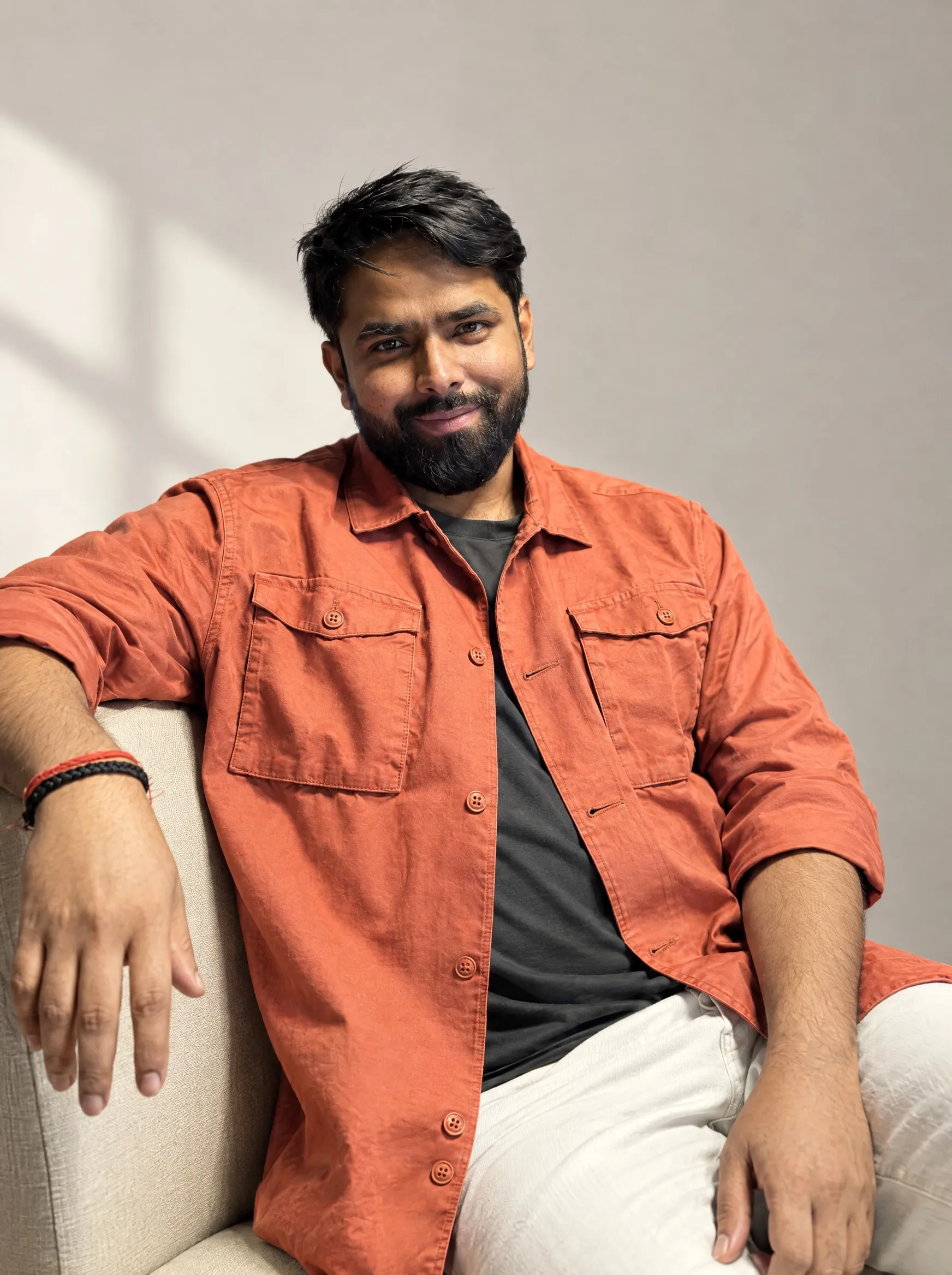
Chandan Kumar is a full-stack growth marketer with 10+ years of operator experience across acquisition, retention, and monetization. Previously Growth Lead at IDFC FIRST Bank and Mahindra Finance; Senior Growth roles at Foundit, WeSkill, and Khabri (YC W19); earlier at ByteDance. Founder of Grovio Labs, an autonomous AI marketing platform, and author of The Autonomous Marketer. He leads a 50,000+ member marketing community in India and writes about full-stack growth, multi-agent marketing systems, and category creation. Based in India.
Newsletter
Essays like this land in The Autonomous Marketer every few weeks. No fluff. Sent when I have something real to say.
Subscribe on SubstackFree. Unsubscribe anytime.
Keep reading
Written by Chandan Kumar · India