India Lens · ·13 min read
Growth Marketing for Bootstrapped Founders
No VC war chest, no brand budget — just a product that works. Here's the growth sequence that works on ₹0–₹50L in spend.
No VC war chest, no brand budget — just a product that works. Here's the growth sequence that works on ₹0–₹50L in spend.
There is a specific cruelty to bootstrapped growth marketing in India. The market is real. The product works. Users who find it, love it. But the gap between “this works” and “enough people know it exists” is a canyon — and every piece of advice available assumes either a VC war chest or a Western audience that uses email, responds to Google ads, and has a credit card ready.
I have run growth on both sides of the funding line. Bootstrapped edtech at WeSkill, funded platforms at ByteDance India, enterprise-scale at Mahindra Finance. The playbook that works for a bootstrapped Indian founder is nothing like what works with ₹5 crore in a paid acquisition budget. It requires a completely different channel sequence, a different definition of success in the first 6 months, and a different set of skills from the founder.
Here is what actually works.
The first mistake bootstrapped founders make is treating direct sales and founder-led outreach as embarrassingly manual tactics that need to be replaced with “real” marketing as soon as possible. This is backwards.
Direct founder-to-customer outreach is not the inferior version of marketing. It is the highest-information, highest-conversion customer acquisition motion available at the early stage — because it produces customer intelligence that no paid campaign can generate. Every direct conversation with a potential customer answers questions about the message, the objection, the trust signal that converts, and the community where more customers like this one live.
The referral system is not an optional add-on. It is the primary acquisition channel for bootstrapped brands in India.
Indian customers are trust-first buyers. They do not convert on ad frequency. They convert when someone they trust has already used the product. This means your first satisfied customer is not just a revenue data point — they are an acquisition asset. Building the referral architecture from customer one is not premature; it is the foundational distribution play.
A working referral system for a bootstrapped brand is simple: a clear ask (would you refer three people who have the same problem you had?), a real incentive (meaningful for your customer segment — cash, credits, or a genuine upgrade), tracked attribution (so you know which customers are bringing others), and follow-through (the referrer gets feedback on who they referred and what happened).
This system takes one afternoon to design and compounding months to produce results. Most bootstrapped founders implement it in month 8 when growth stalls, instead of month 1 when it would have prevented the stall.
The biggest structural advantage a bootstrapped founder can build is a communication channel where they are not dependent on an algorithm, a platform’s advertising policies, or a monthly spend floor to reach their audience.
In India in 2026, that channel is WhatsApp.
Open rates on WhatsApp broadcasts — reaching customers directly at zero marginal cost per send.
A WhatsApp broadcast list is not a newsletter. It is not an email list. It is the closest digital equivalent to having the phone number of every person who is interested in what you are building — and the ability to reach them directly, with 60–70% open rates, at zero marginal cost.
The rules for building a valuable WhatsApp list:
Add everyone who expresses genuine interest. Every customer, every trial user, every person who asks a question that suggests they are interested. The ask is: “Would you like me to send you [specific value] via WhatsApp occasionally? No spam — just when I have something real.” Almost everyone says yes.
Send genuine value, not updates. The mistake is using the list as a broadcast channel for product announcements. The value: a specific insight, a case study, a contrarian take, a resource that helps the subscriber with the problem your product solves. If the message makes the subscriber smarter, the open rate stays high. If it is promotional, it tanks.
Keep it small and engaged before making it large and thin. 200 genuinely engaged subscribers who open every message are worth more than 2,000 subscribers with 8% engagement. The metric that matters is reply rate — not open rate. Replies tell you the message genuinely landed.
Paid acquisition is not available to you yet — not because you cannot afford it, but because you do not have the retention data to know what CAC is sustainable. Spending on paid media without knowing LTV is expensive guesswork.
What is available: SEO that targets the specific questions your exact customers are searching — not the broad category terms dominated by funded brands and media sites, but the narrow, high-intent searches that show a customer is actively solving the exact problem your product solves.
Share of organic signups driven by a single SEO-targeted article at WeSkill — compounding consistently for six months with zero ad spend.
At WeSkill, one piece of long-form content targeting “best online courses for working professionals India” — written for a specific segment, not a general audience — was responsible for a consistent 15% of organic signups for six months after publication. The cost was the founder’s time to write it. The return compounded for months.
The bootstrapped SEO playbook:
Write for questions, not keywords. The search is “how do I [specific problem] in India” — not “best [category]”. Answer the question completely. Better than any other piece of content on the internet. This is achievable for specific, underserved questions even with zero domain authority.
Target Tier 2/3 vernacular search as a moat. Most content on the internet answering Indian-specific questions is in English, aimed at metro audiences. The person in Nagpur or Coimbatore searching in their language or searching for India-specific context finds thin, generic answers. A bootstrapped brand willing to create genuinely good vernacular content for specific markets has almost no competition for several years.
Patience is the advantage. The SEO timeline is 3–6 months. Every funded competitor wants faster returns. The bootstrapped founder who builds consistent content for 12 months accumulates a distribution asset that paid-acquisition-dependent brands cannot replicate by spending money.
The bootstrapped founder’s most underused distribution channel is genuine participation in communities where their customers live.
Not broadcasting product links. Not “hey I built this, check it out.” Genuine participation: answering questions with real expertise, contributing to discussions, becoming the person in the community who is most helpful about the specific problem your product solves.
At the right scale — a specific r/IndiaStartups thread, a LinkedIn group, a WhatsApp community of founders in a specific city — this produces inbound interest that converts at higher rates than any paid channel because the trust signal has been built through demonstrated value rather than purchased exposure.
The funded competitor cannot do this. They can post sponsored content. They can pay influencers. They cannot become genuinely trusted in a community because trust is built through consistent, unsponsored contribution — and that requires founder-level commitment, not a social media manager’s time.
The right time to start spending on paid acquisition is when you can answer three questions:
What is my organic CAC? If you have been acquiring customers through direct, referral, WhatsApp, and SEO, you know approximately what it costs in founder time and effort to acquire a customer. This is your baseline. Paid acquisition only makes sense when the paid CAC is comparable to or better than the organic CAC at a volume that justifies the spend.
What is my 90-day LTV? Not theoretical — actual data from real cohorts. What does a customer acquired three months ago actually spend? What percentage of them are still active? Without this, paid acquisition spend is a guess.
Do I have a working retention system? If the retention curve is poor — users acquired via paid converting and then churning immediately — the paid spend amplifies the retention problem rather than building a business. Fix retention before scaling acquisition.
If you can answer all three, paid acquisition on Meta with vernacular creatives and a referral loop on the back end is the growth lever that takes a bootstrapped Indian brand from ₹1 crore to ₹5 crore faster than anything else.
If you cannot answer them, the money is better spent building the retention system and the organic channels that will make paid acquisition viable when you get there.
The most important thing I have observed about the best bootstrapped Indian founders is that the funding constraint forces a discipline that funded founders often never develop.
When every acquisition has to justify its cost immediately, you find the channels that actually work rather than the channels that look impressive. When the team is small, you build systems instead of headcount. When the budget is limited, you learn what actually converts rather than what gets clicks.
The bootstrapped founders who play this correctly do not catch up to funded competitors after they raise. They build distribution engines that funded competitors cannot replicate — because the engine was built on genuine customer insight, channel discipline, and compounding organic assets rather than on spend.
The funding will come when the engine is working. Build the engine first.
Chandan Kumar is a full-stack growth marketer with 10+ years scaling Indian brands from ₹0 to ₹20Cr+. He is the founder of Grovio Labs and advises a small number of companies per quarter — see how it works. Related: Growth Marketing in India: What Western Playbooks Get Wrong · WhatsApp Marketing in India: The Channel Most Brands Underuse · The Part After Product-Market Fit Nobody Talks About.
Growth marketing with minimal budget in India follows a specific sequence: start with direct sales and referral architecture (both near-zero cost), then build a WhatsApp broadcast and lifecycle system (low cost, high engagement), then invest in SEO-targeted content (compound returns, zero ad spend), then add vernacular content once the English/Hindi base is established. Paid acquisition is the last channel to add, not the first — because it amplifies a working organic engine rather than substituting for one that doesn't exist. The mistake is starting with paid media when the unit economics aren't established.
The highest-ROI low-cost channels for Indian bootstrapped startups are: WhatsApp (build a broadcast list from day 1, nurture weekly), LinkedIn content (works for B2B and thought leadership, no ad spend required), community building in relevant niche groups, referral programs with genuine incentives, and long-form SEO content targeting questions your customers are searching. These channels take 3–6 months to compound but build durable acquisition pipelines that don't stop working when the budget runs out.
Bootstrapped startups win on distribution by being faster, more authentic, and more India-specific than funded competitors. Funded competitors have large budgets but slow execution and generic positioning. A bootstrapped founder can: personalise at a level that a 50-person marketing team cannot, build genuine community relationships that a brand account cannot, and go deeper into vernacular and Tier 2/3 markets that funded competitors are not yet willing to invest in. The competitive advantage of the bootstrapped founder is not budget — it is speed, authenticity, and the willingness to do what doesn't scale until it does.
Yes, but with a specific approach. SEO for bootstrapped Indian startups should target high-intent, low-competition keywords — questions your specific customers are searching, not broad category terms dominated by funded brands and media companies. A bootstrapped edtech startup should not try to rank for 'online learning India' — they should rank for 'best accounting course for commerce students Pune' or 'CA foundation exam preparation schedule'. Narrow, specific, high-intent keywords compound into a distribution asset that no amount of paid spend can replicate.
WhatsApp is the most important marketing channel for bootstrapped Indian startups because it has the highest engagement-to-cost ratio of any channel available. A WhatsApp broadcast list of 500 engaged users outperforms an email list of 5,000 for open rates and response rates. The investment required is time and consistency — sending genuine value every week — not money. Starting a WhatsApp broadcast list from the first customer and nurturing it consistently produces one of the most durable distribution assets a bootstrapped brand can build.
The right sequence for a bootstrapped Indian startup: Month 1–3: founder-led direct outreach and referral system (zero cost). Month 3–6: WhatsApp broadcast + community participation in relevant niche groups. Month 6–12: long-form SEO content targeting specific customer questions. Month 9–15: LinkedIn or platform-native content for thought leadership and social proof. Month 12+: paid acquisition, only when organic CAC is established and the paid channel can be measured against it. This sequence builds a durable organic engine first and adds paid amplification later rather than starting with paid and hoping to build organic later.
The most common mistakes: starting with paid advertising before the message is validated (expensive failure), hiring a content person or social media manager before the acquisition strategy is clear (builds activity, not growth), focusing on Instagram followers and LinkedIn likes rather than a list they own (WhatsApp or email), not building a referral system from the first satisfied customer, and copying funded competitors' marketing (they can afford to waste money on channels that don't work — you cannot). The bootstrapped constraint, applied correctly, is actually a growth advantage: it forces the founder to find the channels that actually work rather than hedging across twenty that might.
— Chandan
India ·
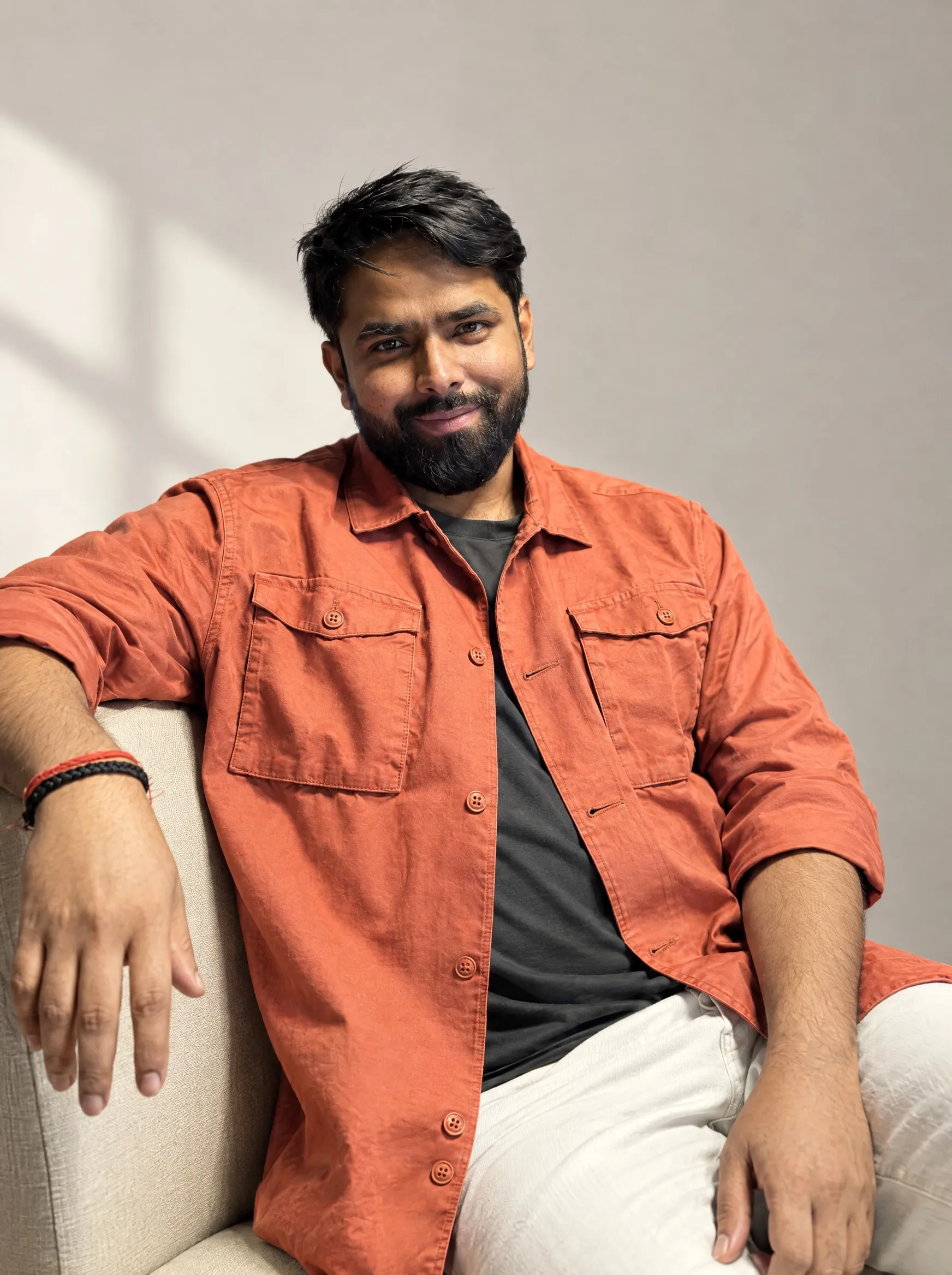
About the author
Chandan Kumar is a full-stack growth marketer with 10+ years of operator experience across acquisition, retention, and monetization. Previously Growth Lead at IDFC FIRST Bank and Mahindra Finance; Senior Growth roles at Foundit, WeSkill, and Khabri (YC W19); earlier at ByteDance. Founder of Grovio Labs, an autonomous AI marketing platform, and author of The Autonomous Marketer. He leads a 50,000+ member marketing community in India and writes about full-stack growth, multi-agent marketing systems, and category creation. Based in India.
Newsletter
Essays like this land in The Autonomous Marketer every few weeks. No fluff. Sent when I have something real to say.
Subscribe on SubstackFree. Unsubscribe anytime.
Keep reading
Written by Chandan Kumar · India